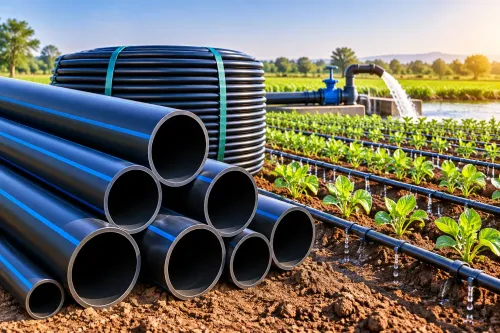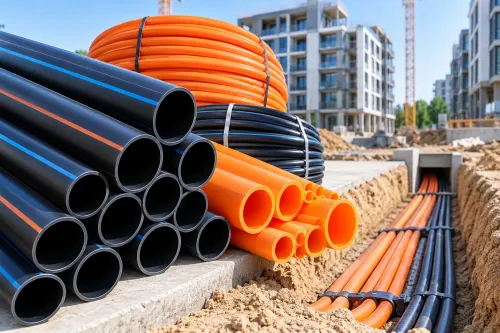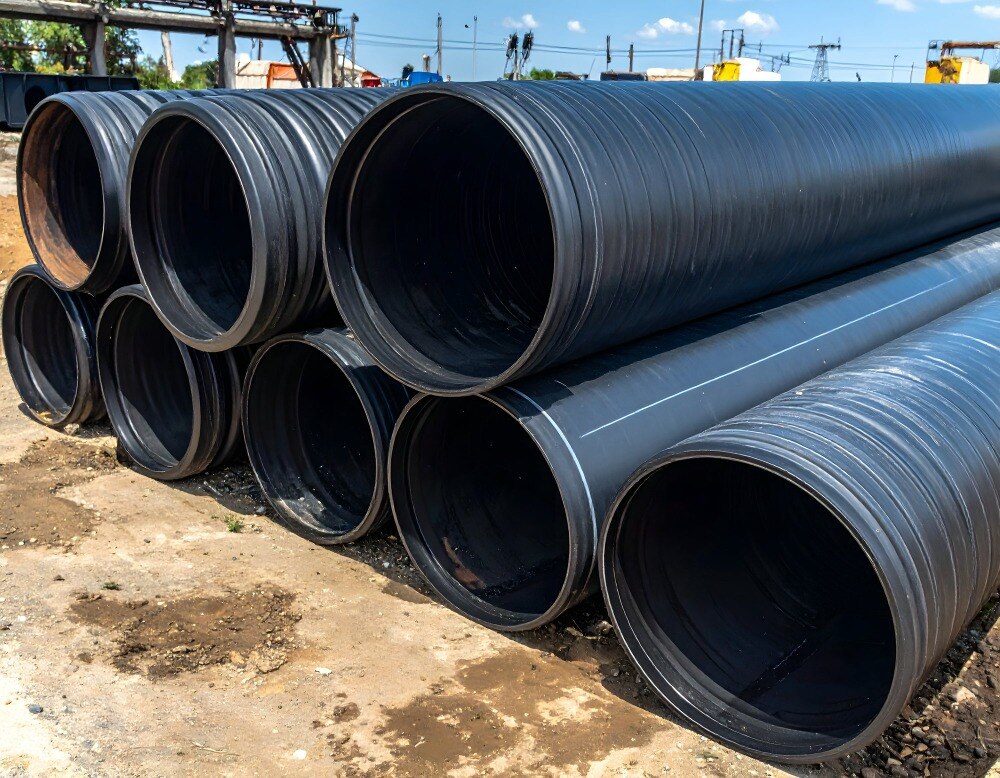
A quotation for “HDPE pipe” is incomplete unless it identifies the pipe’s dimensions, pressure basis, material designation, governing standard, delivery format, and joining requirements. By the end, you will have a supplier-comparison checklist that covers design fit, installation risk, quality records, receiving inspection, and the real installed cost.
Key takeaways
- Specify service, standard, diameter basis, SDR, PE grade, and delivery format.
- Match SDR and PE material to pressure, temperature, fluid, and installation loads.
- Compare fusion, electrofusion, and mechanical joints against site access and labour.
- Demand test reports, traceability records, dimensional checks, and handling instructions.
What should your polyethylene pipe purchase specification include?
Give polyethylene pipe suppliers a project specification, not “HDPE pipe.” State the service, governing standard, outside-diameter basis, pressure class or SDR, PE material designation, and delivery format so every quotation describes the same product.
- Intended service: pressure water, gravity drainage, irrigation, telecom conduit, or another fluid or application
- Governing standard: IS 4984, ISO 4427, EN 12201, ASTM D3035, or ASTM F714, as applicable
- Outside diameter and wall thickness, in millimetres, with the measurement basis clearly stated
- PE designation or compound grade, including UV-stabilisation requirements for outdoor exposure
- SDR, nominal pressure class, and design operating pressure; provide surge pressure separately
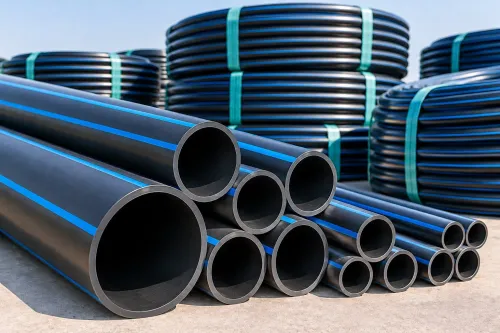
- Nominal lengths, required quantity, and whether you want coils, reels, or straight sticks
- Joining method: butt fusion, electrofusion, or mechanical couplings, including required fittings and transitions
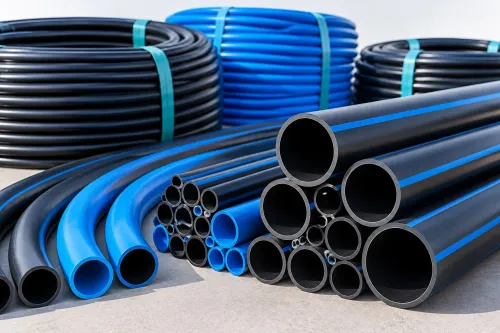
- Colour, stripe or identification requirements for water, irrigation, or telecom use
- Delivery location, requested date, unloading limits, maximum coil or stick dimensions, and site access restrictions
- Required documents: lot-linked resin or compound identification, production date, dimensions, standard compliance, and test results
Ask for the supplier’s fusion procedure when heat joining is specified, and identify who supplies qualified operators and equipment. A quote should also separate pipe, fittings, couplers, transport, and special handling. This detail lets you compare polyethylene pipes for contractors on delivered and installed cost, not only price per metre.
How do you match pipe rating and material to the project?
A lower SDR means a thicker wall and higher pressure capacity, but it does not establish a safe rating by itself. Match the pipe to operating pressure, surge pressure, fluid, temperature, burial depth, traffic loading, and the governing standard.
| Application | Select | Check before ordering |
|---|---|---|
| Pressure water or sewer | Solid-wall PE100 or PE4710; specify SDR or pressure class | Use ISO 4427, EN 12201, AWWA C906, IS 4984, ASTM D3035, or ASTM F714 as applicable. Confirm the design coefficient and temperature derating. |
| Gravity drainage | DWC or corrugated polyethylene with a smooth or semi-smooth bore | Specify ring stiffness, cover depth, traffic load, joint watertightness, and installation standard. Do not substitute it for pressure pipe. |
| Telecom duct | PLB or smooth-wall conduit sized for the cable and installation method | Confirm inner diameter, pulling or blowing requirements, bend radius, color, UV stabilisation, and whether the duct is pressure-rated. |
| Irrigation | Solid-wall pressure pipe matched to pump discharge and surge | Check SDR, pressure class, UV exposure, fittings, filtration, and chemical compatibility with fertiliser or treated water. |
| Custom service | Select the pipe type after defining fluid, load, temperature, and joining method | Require a written design review, compound designation, and lot-specific test evidence. |
PE100 and PE4710 are different designation systems; never infer equivalent pressure ratings from “HDPE.” Ask HDPE pipe suppliers to state outside-diameter basis, wall thickness, PE designation, and certification. For polyethylene pipes for contractors, that detail prevents a conduit, drainage pipe, or under-rated pressure pipe from reaching site.
Which joining method and installation system will control site cost?
Installed cost depends on the joining system, not just the pipe price. Compare fusion-machine mobilisation, qualified labour, fittings, handling, testing, and repair exposure before selecting polyethylene pipes for contractors.
| Method | Cost and equipment | Use it when | Main cost risk |
|---|---|---|---|
| Butt fusion | One machine joins pipe ends directly; few separate fittings | Long, accessible runs of matching pipe diameter and wall thickness | Machine access, trained operators, cooling time, bead removal, and weather protection |
| Electrofusion | Couplers or saddles contain heating elements; less alignment equipment | Repairs, tie-ins, restricted excavations, and mixed fixed sections | Expensive fittings, surface preparation, generator power, scraping, and cooling control |
| Mechanical coupling | Bolts, seals, or compression parts avoid fusion equipment | Emergency repairs, transitions to valves or metal pipe, and locations where fusion is impractical | More components, possible leakage, thrust restraint, and lower pressure or temperature limits |
Use butt fusion for long straight runs where equipment can reach the trench. Choose electrofusion for confined spaces or a repair that cannot be moved into alignment. Use mechanical couplings for transitions and urgent work, after confirming the coupling’s pressure rating and dimensional basis.
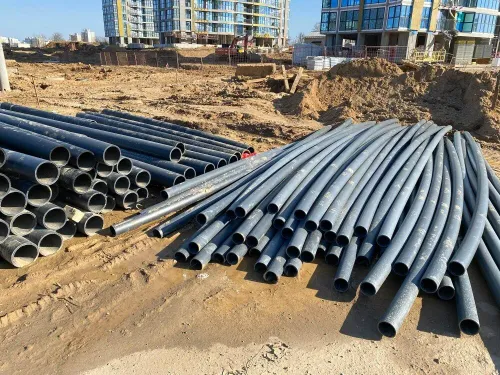
Ground conditions change the estimate: rocky excavation increases fitting and support work, while unstable or wet trenches demand dewatering, bedding, temporary supports, and careful alignment. Long coils reduce joints but require suitable trailers, lifting gear, bend-radius control, and space to lay out pipe.
Ask the supplier for fusion procedures aligned with ASTM F2620, fitting compatibility, shipment dimensions, and test or repair requirements. Do not connect corrugated drainage pipe to a pressure system; its joint and stiffness criteria differ from solid-wall pressure pipe.
What should you demand in a supplier quotation and quality file?
Demand a quotation that prices the specified pipe, not merely a nominal diameter. Require outside diameter, wall thickness, SDR or pressure class, PE designation, standard, colour, lengths, fittings, quantity, freight, taxes, lead time, payment terms, quotation validity, warranty, and unloading responsibility.
| Document | Must identify | Why it matters |
|---|---|---|
| Quotation | Unit, total, delivery basis, coil or stick lengths, reel dimensions | Exposes freight, handling, and length differences |
| Conformance certificate | Resin or compound, production lot, manufacturing date, dimensions, SDR, standard | Links compliance to the delivered batch |
| Test record | Hydrostatic pressure, dimensions, tensile or elongation, carbon-black or oxidation-induction results where specified | Shows measured performance rather than catalogue claims |
| Capability file | Extrusion range, calibration records, traceability system, fusion support, replacement policy | Tests whether the supplier can deliver consistently |
Ask polyethylene pipe suppliers for certificates referencing IS 4984, ISO 4427, EN 12201, or AWWA C906 as your specification requires. Do not accept “HDPE water pipe” as the standard; AWWA C906, for example, covers pressure pipe and fittings but still requires the ordered size and class to be stated.
- Confirm every coil, reel, or straight length carries the order number, lot number, size, SDR, and manufacturing date.
- Require a sample marking photograph and packing list before dispatch.
- Ask HDPE pipe suppliers to state how shortages, ovality, damaged ends, or a failed receiving test will be resolved.
For a quotation from Harsh Agro Pipes And Fittings, use the same lot-linked checklist so its offer remains comparable with other manufacturers.
Related products
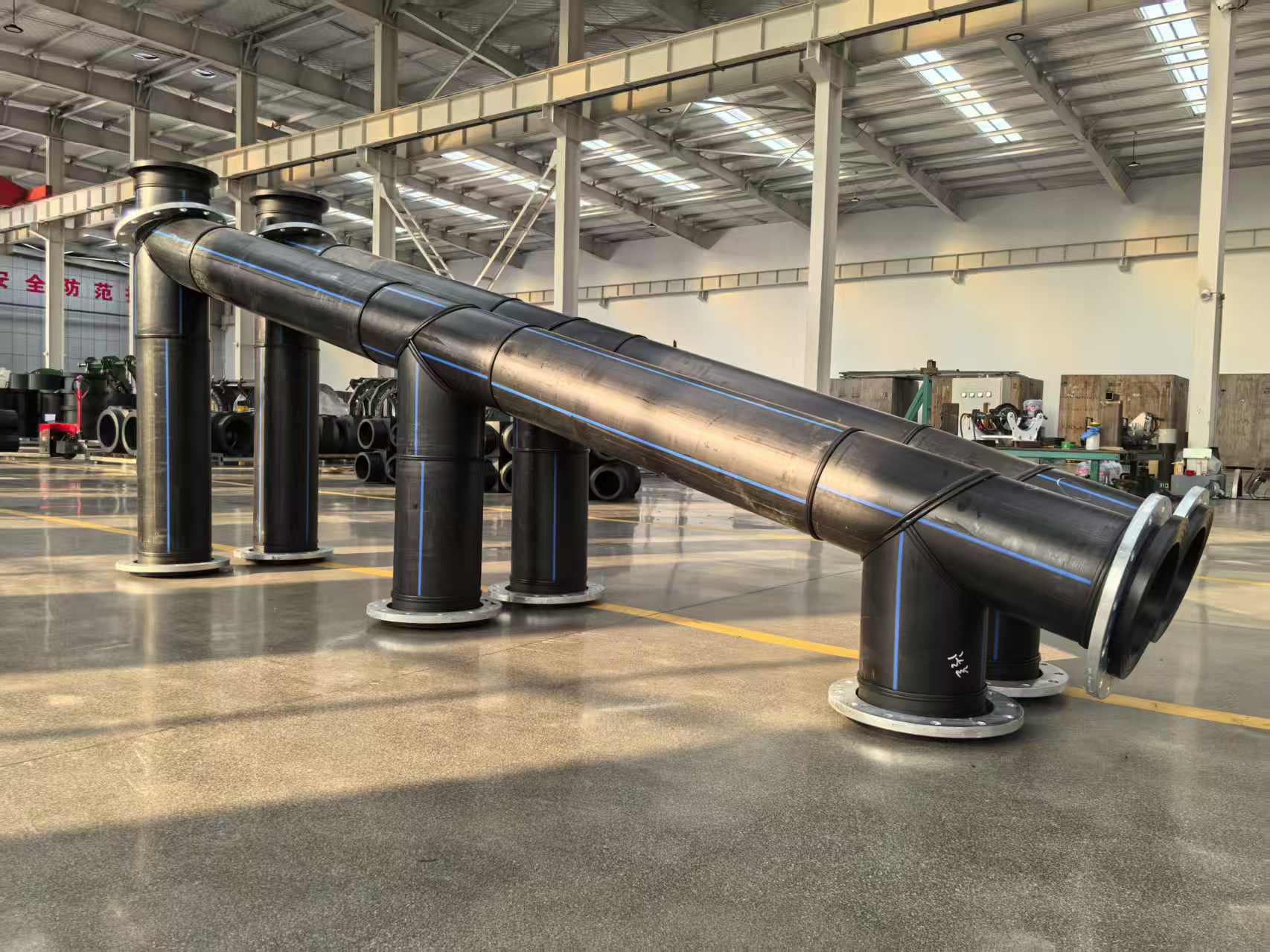
 | HDPE Pipe Manufacturing Our HDPE pipes are manufactured using advanced, state-of-the-art technology to ensure superior strength, flexibility, and long-lasting performance. View product → |
 | Custom Piping Solutions We provide tailor-made drainage and plumbing solutions based on your project requirements. View product → |
How should you inspect, unload, and store delivered pipe?
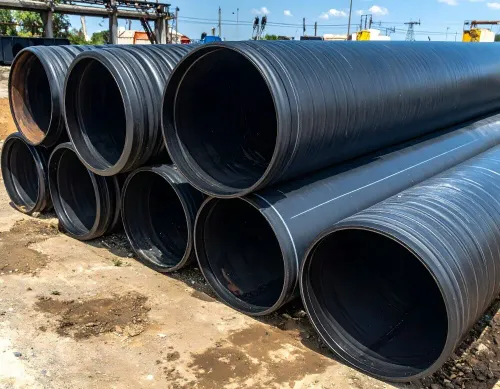
Reject or quarantine any pipe with deep gouges, cuts, cracks, kinks, flattened sections, severe ovality, exposed contamination, damaged ends, or missing identification. For polyethylene pipes for contractors, match the marking and delivery documents to the purchase order: outside diameter, wall thickness, SDR or pressure class, PE designation, applicable standard, production lot, and manufacturing date.
Generic catalogue data does not verify the delivered lot.
1. Inspect each reel, coil, or straight length before unloading. Photograph damage, record the lot number, and ask polyethylene pipe suppliers for a lot-specific certificate showing dimensions, material designation, standard, and test or compliance results.
2. Lift with wide textile slings positioned to support the pipe. Do not use chains, wire rope, hooks, or forklift tines against the pipe; a cut from lifting equipment can later become a pressure failure.
3. Keep pipe off the ground and never drag it across gravel, concrete edges, or steel. Use skids, rollers, or a clean lifting route, then cap open ends to exclude mud and stones.
4. Uncoil with a controlled pay-off stand, restraining the coil as it opens. Secure the released pipe against snapback, respect the manufacturer’s minimum bend radius, and never force a cold coil straight.
5. Stack straight lengths on level supports with chocks and no point loading. Store coils flat unless the supplier specifies otherwise, keep them away from sharp edges, and protect from direct sunlight with a ventilated cover; do not trap heat under plastic sheeting.
Frequently asked questions
What should a polyethylene pipe purchase specification include?
State the service, governing standard, outside-diameter basis, pressure class or SDR, PE material designation, and delivery format.
How do you match pipe rating and material to the project?
Check operating pressure, surge, temperature, fluid, burial loads, and installation method before selecting the PE grade and SDR.
Which joining method and installation system will control site cost?
Compare butt fusion, electrofusion, and mechanical joints against equipment access, crew skill, trench conditions, fittings, and installation time.
What should you demand in a supplier quotation and quality file?
Require a complete product description, standards, quantities, delivery terms, batch traceability, dimensional records, pressure-test evidence, and material certificates.
How should you inspect, unload, and store delivered pipe?
Check labels, coils, lengths, surfaces, ends, and fittings on arrival; unload with lifting equipment and store pipe on stable supports away from damage and heat.
Keywords