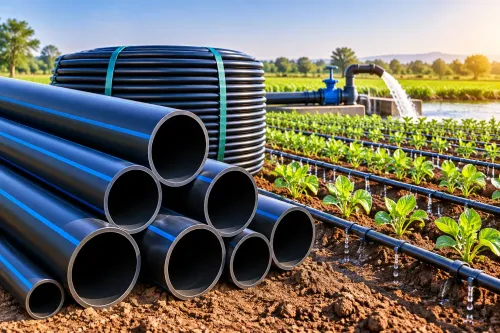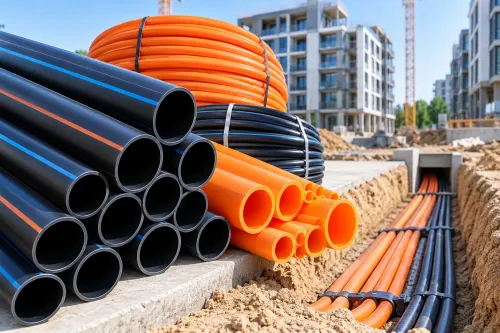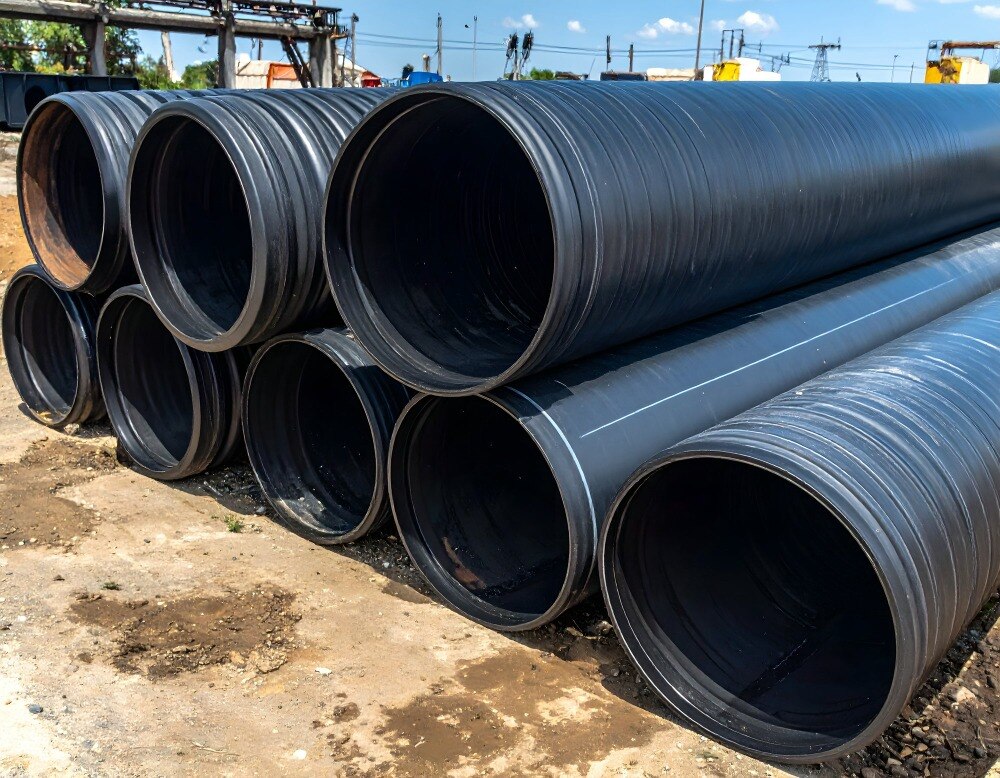
A monsoon water line must handle more than rainfall: flooded trenches, saturated soil, shifting embedment, pump surges and sudden changes in demand can all damage an otherwise suitable pipe. You will be able to match the pipe, hydraulic design, joints and installation method to your system, then specify what a supplier must prove before delivery.
Key takeaways
- Define the source, destination and flood conditions before selecting pipe.
- Match diameter and SDR to flow, pressure, elevation and pump operation.
- Use restrained joints, surge control and proper trench backfill in shifting ground.
- Demand resin, SDR, pressure, testing and weather-exposure details in writing.
Identify the monsoon water system before choosing a pipe
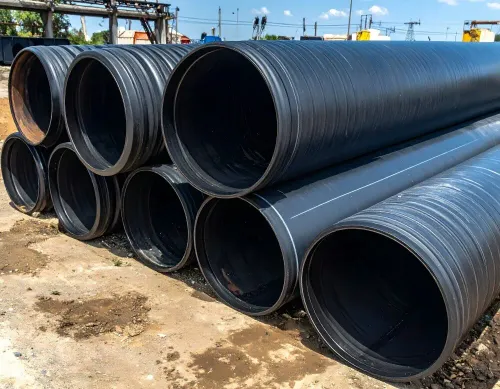
Start with the water job, not the pipe catalogue: choosing hdpe water pipes for monsoon in maharashtra requires you to define where water comes from, where it goes, and what happens during a flooded trench. Rainfall alone does not determine the pipe; flow, pressure, elevation, distance and ground conditions do.
| Application | Measurements that determine the requirement | Main monsoon concern |
|---|---|---|
| Roof-rainwater collection | Catchment area, rainfall intensity, gutter flow, storage volume and outlet level | Debris blockage, overflowing tanks and exposed-pipe heating |
| Farm pond to field | Pump flow, delivery length, elevation gain, operating hours and outlet count | Soft access roads, washout and repeated wet–dry movement |
| Borewell to tank | Pump discharge, static and pumping water levels, total head and pipe length | Air entry, pump cycling and flooded excavation |
| Municipal or building distribution | Peak demand, service connections, pressure at the highest point and road-crossing depth | Traffic loading, trench safety and reinstatement |
| Temporary dewatering | Pump capacity, sump inflow, discharge route, lift and permitted outlet | Abrasion, unstable trenches and rapid relocation |
Record the route length, high and low points, trench depth, soil type and groundwater level before selecting a nominal diameter or pressure class. A gravity line still needs a flow calculation; a thin-wall pipe is not automatically suitable.
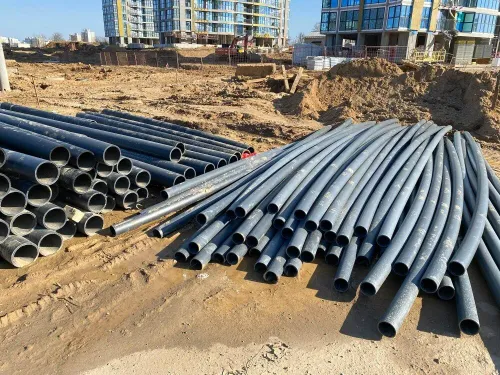
For saturated Pune or Maharashtra ground, specify dewatering where needed, compacted haunching and embedment, and temporary restraint or ballast if an empty pipe could float. Loose backfill removes the side support HDPE needs, while washout can leave the line unsupported.
Size the pipe using flow, SDR, pressure and pump conditions
Choose the nominal outside diameter from the required flow, then check that SDR, pressure class and pump transients leave enough margin.
Use these design inputs:
- Peak and average flow, including simultaneous outlets and storage-tank refill demand
- Available pump head after elevation, friction loss and fittings
- Maximum operating pressure and pressure surges from pump starts, stops, power failures and valve closure
- Water temperature, installation method and whether the line is buried, exposed or temporary
SDR is the ratio of nominal outside diameter to minimum wall thickness. For the same outside diameter, a lower SDR means a thicker wall and generally greater pressure capacity, but it also reduces the internal diameter.
That smaller bore increases velocity and friction loss, so two pipes sold under the same nominal diameter can deliver different flow rates.
| Selection factor | What it determines | What can go wrong if ignored |
|---|---|---|
| Outside diameter and SDR | Internal diameter, flow velocity and wall strength | Insufficient flow or excessive head loss |
| Pressure class | Allowable working pressure | Leakage or rupture under sustained pressure |
| Pump and valve behaviour | Transient pressure and vacuum risk | A PN16 pipe can fail during a surge |
| Peak hydraulic demand | Required delivery rate and pump duty | Tank filling slows when several outlets operate |
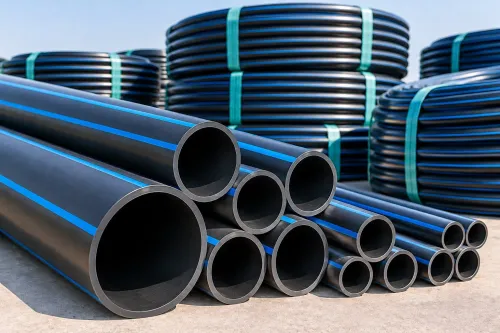
For hdpe water pipes in Pune, specify nominal outside diameter, minimum wall thickness or SDR, pressure class, PE grade and the applicable edition of IS 4984. A gravity line still needs pressure and collapse checks; non-potable water does not make a thin-wall pipe automatically suitable.
Build a buried line that survives flooded and shifting ground
A flooded trench can lift an empty HDPE pipe, displace its bedding and leave the completed line unsupported. Stop placement if water is flowing through the excavation; divert runoff, provide a sump and pump, and keep the pipe on a firm, drained foundation rather than laying it in standing water.
Install and protect the line in this order:
- Shape the trench base, remove soft pockets and place specified bedding. Use a geotextile separator where saturated soil can wash fine material out of the embedment.
- Lower the pipe without dropping or dragging it. Keep stones, timber and sharp debris away from the barrel.
- Place selected material under the pipe and compact it beneath both springlines. Haunching is the restraint that prevents lateral movement; dumping backfill only over the crown leaves voids beside the pipe.
- Use broad, non-abrasive straps connected to engineered deadmen or approved ballast when groundwater can rise around an empty pipe. Secure it before dewatering stops, and remove temporary restraints only after embedment is complete.
- Backfill in controlled lifts, compacting each lift to the project requirement. Protect shallow sections from construction traffic until cover and reinstatement are complete.
Do not use chains, wire or point restraints that cut the polyethylene. At steep slopes, outlets and stream crossings, add thrust restraint or an engineered anchor detail without blocking the pipe’s planned thermal movement.
For exposed risers or temporary lines, specify weather resistant water pipes with UV-stabilised compound documentation, verified carbon-black content and dispersion. Black colour alone proves nothing. Flooding does not make a pipe potable-water approved; keep the pipe, fittings and jointing materials within the project’s hygienic-contact specification.
Control joints, water hammer and exposed-pipe weathering
Fusion does not make a monsoon line failure-proof. A butt-fused joint depends on clean, square pipe ends, correct heater temperature, matching alignment, controlled pressure and the specified cooling time.
Inspect the bead and record the operator, machine, pipe batch and fusion parameters; a joint disturbed while hot can leak after the trench floods, even when the pipe itself is undamaged.
A PN16 label does not cover water hammer. HDPE’s lower elastic modulus reduces surge-wave speed compared with steel, but rapid pump changes or valve closure can still exceed the allowable pressure. Calculate both maximum and minimum transient pressures, not just steady pump head.
Specify the hydraulic controls that the calculation requires:
- Set pump start and stop ramps, including the response after a power failure.
- Select non-return valves that do not slam shut and set valve-closing times.
- Place air valves and surge vessels or relief equipment at locations identified by the transient analysis.
Exposed sections need a different detail from buried pipe. For hdpe water pipes for monsoon in maharashtra, use black, UV-stabilised compound with documented carbon-black content and dispersion; colour alone does not prove weather resistance.
Weather resistant water pipes still expand and contract with daily temperature changes, so support spacing, anchors, expansion allowance and flexible transitions at valves, tanks and rigid walls must be designed rather than copied from steel layouts. Allowing movement prevents pulled joints and concentrated stress.
Write a purchase specification that a manufacturer must substantiate
Reject a consignment that arrives with only a catalogue sheet. Your purchase order must identify the exact pipe supplied and require evidence linking every length to its raw-material batch and production run.
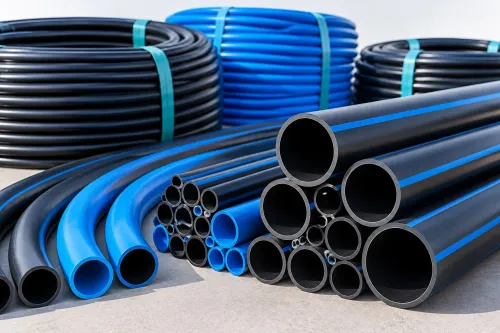
1. Product declaration: name the applicable edition of IS 4984, PE grade, nominal outside diameter, wall thickness or SDR, pressure class, colour, end finish and intended service. State whether the line carries potable water.
2. Factory test file: require dimensional records, MFR results for resin before and after processing, hydrostatic pressure-test results, and conformity-test reports required by IS 4984. Request an independent or accredited laboratory report when the contract specifies one.
3. Compound evidence: obtain the resin manufacturer, compound designation, batch number, delivery date and certificate of analysis. For black pipe, require carbon-black content and dispersion results; colour alone does not prove UV resistance for exposed service.
4. Jointing evidence: require fusion-procedure qualification, compatible PE grade information, operator records, machine calibration certificates and sample marking that shows manufacturer, standard, diameter, SDR, batch and production date.
5. Delivery traceability: require a length register, test certificates, dispatch inspection record and replacement procedure for damaged or unmarked pipe. For drinking water, separately verify hygienic-contact compliance for pipes, fittings, lubricants and jointing materials.
For hdpe water pipes in pune, Harsh Agro Pipes And Fittings should provide the same traceability file for buried mains, building-service lines and exposed temporary lines; those applications face different UV, traffic, dewatering and reinstatement risks. Approve supply only after the documents match the markings on delivered pipe.
Related product
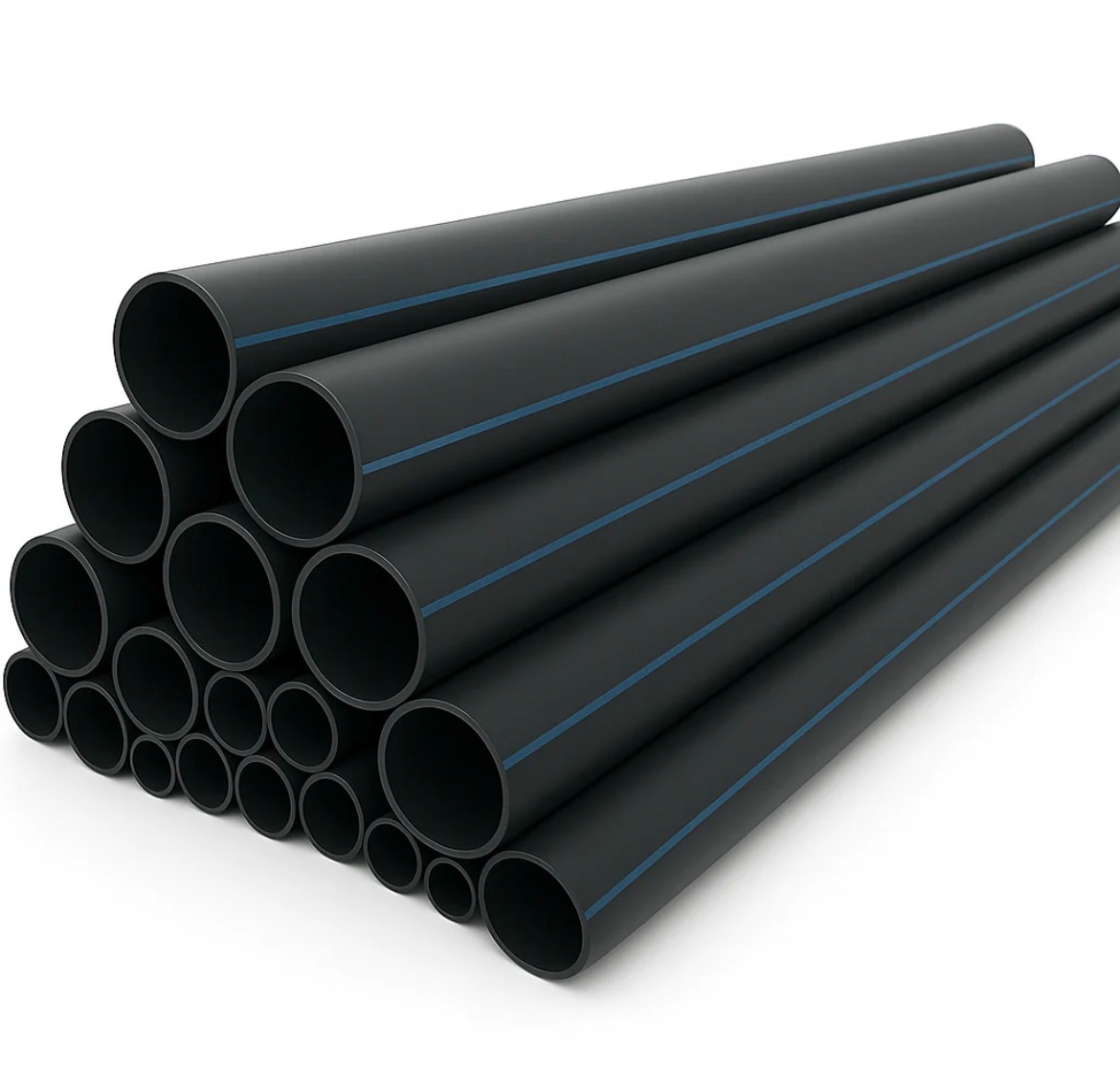 | HDPE Pipe Manufacturing Our HDPE pipes are manufactured using advanced, state-of-the-art technology to ensure superior strength, flexibility, and long-lasting performance. View product → |
Frequently asked questions
How do you choose HDPE water pipes for a Maharashtra monsoon system?
Define the water source, destination, required flow, elevation change, pipe length, operating pressure and flooded-trench conditions before choosing diameter and SDR.
How do flow, SDR and pump conditions affect HDPE pipe selection?
Flow determines diameter, while SDR controls the pipe wall relationship and pressure capacity. Include static head, pump pressure, cycling, start-up surges and water hammer in the design.
How should you build a buried HDPE water line in flooded or shifting ground?
Prepare a stable trench base, use suitable bedding and side support, control groundwater, compact backfill in layers and protect the line from flotation and differential settlement.
How can you protect HDPE water pipes from joints, water hammer and weather?
Plan thermal movement at exposed sections, use correctly fused or restrained joints, install surge control where pump transients occur and protect exposed pipe from prolonged sunlight and physical damage.
What should a purchase specification require from an HDPE water pipe manufacturer?
Specify material grade, applicable standard, outside diameter, SDR, pressure class, length, colour, batch traceability, test documents, jointing requirements and installation conditions.
Keywords