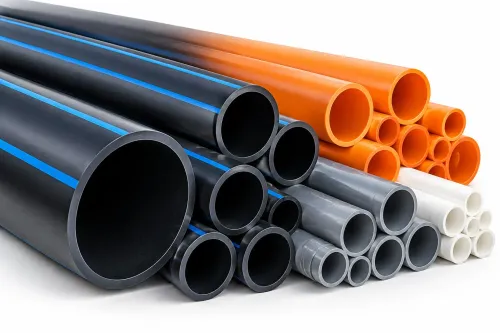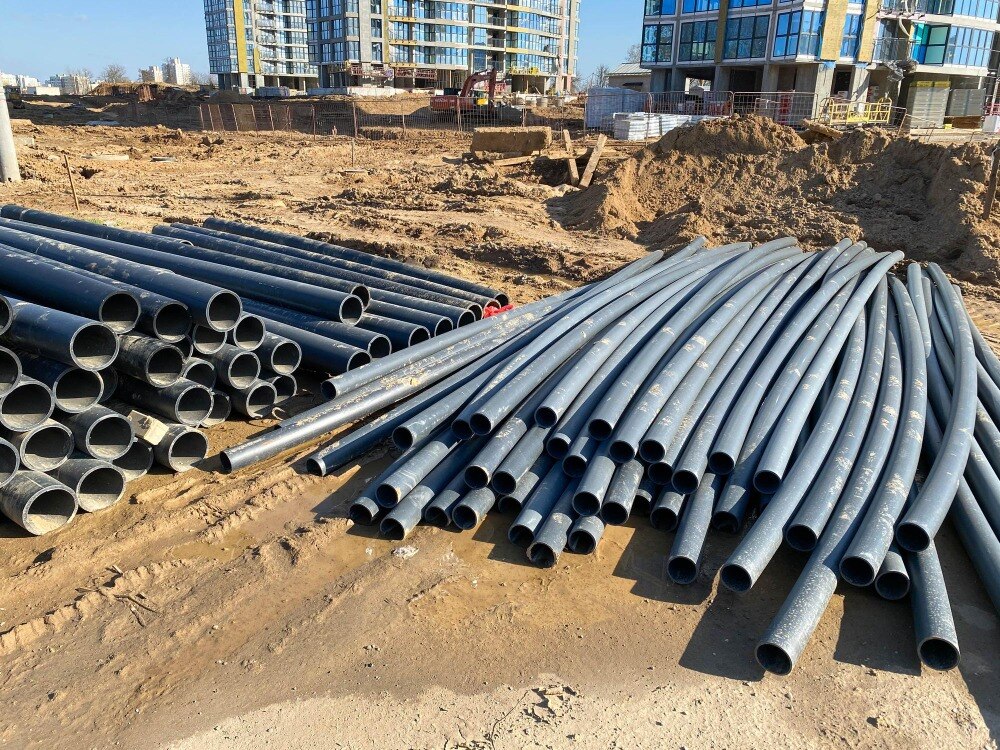
HDPE drainage pipes carry wastewater, rainwater, groundwater and other collected liquids through buried or exposed systems, but the label covers several different pipe constructions. By the end, you will be able to match each drainage application with the right pipe type, hydraulic design, joint and installation specification.
Key takeaways
- Use HDPE drainage pipes for gravity sewage, stormwater, groundwater and industrial effluent systems.
- Size pipes using design flow, slope, cover depth and expected loading.
- Specify pipe stiffness, diameter, joint type and installation conditions before buying.
- Verify certificates, dimensions, joints and installation records before approving the system.
Where HDPE drainage pipes are used in practice
HDPE drainage pipe applications centre on moving water or wastewater by gravity, not supplying water under pressure. The pipe carries collected sewage, rainwater, groundwater, effluent, leachate or mine water through systems such as:
- Gravity sanitary sewer mains
- Stormwater drains
- Roof and site drainage
- Road-crossing drains and culverts
- Agricultural subsurface drains
- Industrial effluent lines
- Landfill leachate collection systems
- Mining drainage networks
- Temporary bypass lines
An HDPE label does not establish pressure capability. A pumped wastewater force main, pressurised irrigation line or water-supply pipe needs pressure-rated construction, fittings, a stated pressure class and surge review.
Solid-wall HDPE, single-wall corrugated pipe and structured-wall or double-wall pipe are separate constructions, not interchangeable names.
| Option | Construction | Typical use |
|---|---|---|
| Solid-wall HDPE | Uniform smooth wall; fusion or mechanical joints | Gravity sewers, effluent and bypass lines |
| Single-wall corrugated HDPE | Corrugated wall with flexible, lightweight form | Shallow site drainage and agricultural drains |
| Structured-wall or double-wall HDPE | Corrugated outer wall with relatively smooth inner wall | Stormwater drains, culverts and deeper gravity installations |
Perforated HDPE pipe collects groundwater rather than conveying a sealed wastewater stream. Design these elements as one system:
- Slot pattern and open area
- Filter aggregate gradation
- Geotextile placement
- Pipe invert level
- Outlet location and capacity
A geotextile wrap cannot replace a correctly graded filter where soil fines can migrate. Choose the pipe construction and joint classification—soil-tight or watertight—after confirming the service and installation conditions.
How gravity drainage changes the pipe choice
A gravity line relies on invert level, slope, flow direction and available fall, so select a non-pressure drainage construction for the actual route. Sanitary sewers, storm drains, culverts and perforated underdrains fit these HDPE drainage pipe applications; pumped wastewater and force mains do not.
Pressure discharge requires pressure-rated pipe and fittings, a stated pressure class and surge review. Using a generic drainage specification on a force main can cause joint separation, buckling or rupture during pump starts and stops.
| Construction | Hydraulic interior | Main selection trade-off |
|---|---|---|
| Smooth-wall HDPE | Smooth bore, low friction and easier cleaning | Higher mass or greater wall thickness can increase cost |
| DWC or double-wall HDPE | Relatively smooth inner wall with corrugated outer wall | Lower mass with ring stiffness, but a different internal diameter and joint system |
| Other structured-wall pipe | Profiled wall designed for stiffness | Check wall series, nominal internal diameter and installation limits |
Choose smooth-wall HDPE when hydraulic efficiency, cleaning access or pressure capability matters. Choose DWC or another structured-wall product when burial depth, traffic loading, ring stiffness and handling weight favour a profiled wall. Compare actual internal diameter, not outside diameter alone, because two products marked with the same nominal size can carry different flows.
Use this gravity-drainage checklist:
- Confirm invert elevations, design slope, flow direction and available fall.
- Record burial depth, groundwater, traffic loading and required ring stiffness.
- Verify the selected construction’s internal diameter, mass, joints and cost.
- Design bedding, haunch support and compaction; flexibility lets soil and pipe share buried loads, but poor embedment or voids can still cause deflection and failure.
How to size and specify the pipe before buying
A guessed outside diameter is not a drainage specification. Wall thickness changes with SDR, and solid-wall, single-wall corrugated and structured-wall pipes can have different internal diameters at the same nominal size.
1. Define the service and construction: gravity sewer, stormwater, culvert, field drain, effluent, leachate, mine drainage or bypass; then select solid-wall HDPE, single-wall corrugated or structured-wall/double-wall pipe. State outside diameter, measured internal diameter, wall thickness, ring-stiffness class or wall series, and SDR or pressure class where pressure applies.
2. Calculate the design flow and state the pipe slope, burial depth, soil and traffic loading, groundwater conditions, operating temperature and chemical exposure. Specify whether the line will run full or partially full, and identify inlet control, bends and sediment risk.
3. Use Manning’s equation, Q = (1/n) A R²⁄³ S¹⁄², with the selected product’s measured dimensions and a justified roughness value. Capacity depends on internal diameter, slope, roughness, inlet control, bends, sediment and partial-flow conditions; do not assume every HDPE product has the same Manning coefficient.
4. Specify the connection method and leakage classification: butt fusion or electrofusion, gasketed bell-and-spigot, coupling or sleeve, with soil-tight or watertight performance stated in writing.
5. For Indian procurement, request the applicable standard. IS 16098 covers non-pressure structured-wall thermoplastic drainage and sewerage systems; IS 4984 concerns polyethylene water-supply pipes and does not automatically define a drainage product.
When comparing hdpe drainage pipes in pune, ask Harsh Agro Pipes And Fittings for construction details, standard, test records and installation limits—not only a metre rate.
Related products
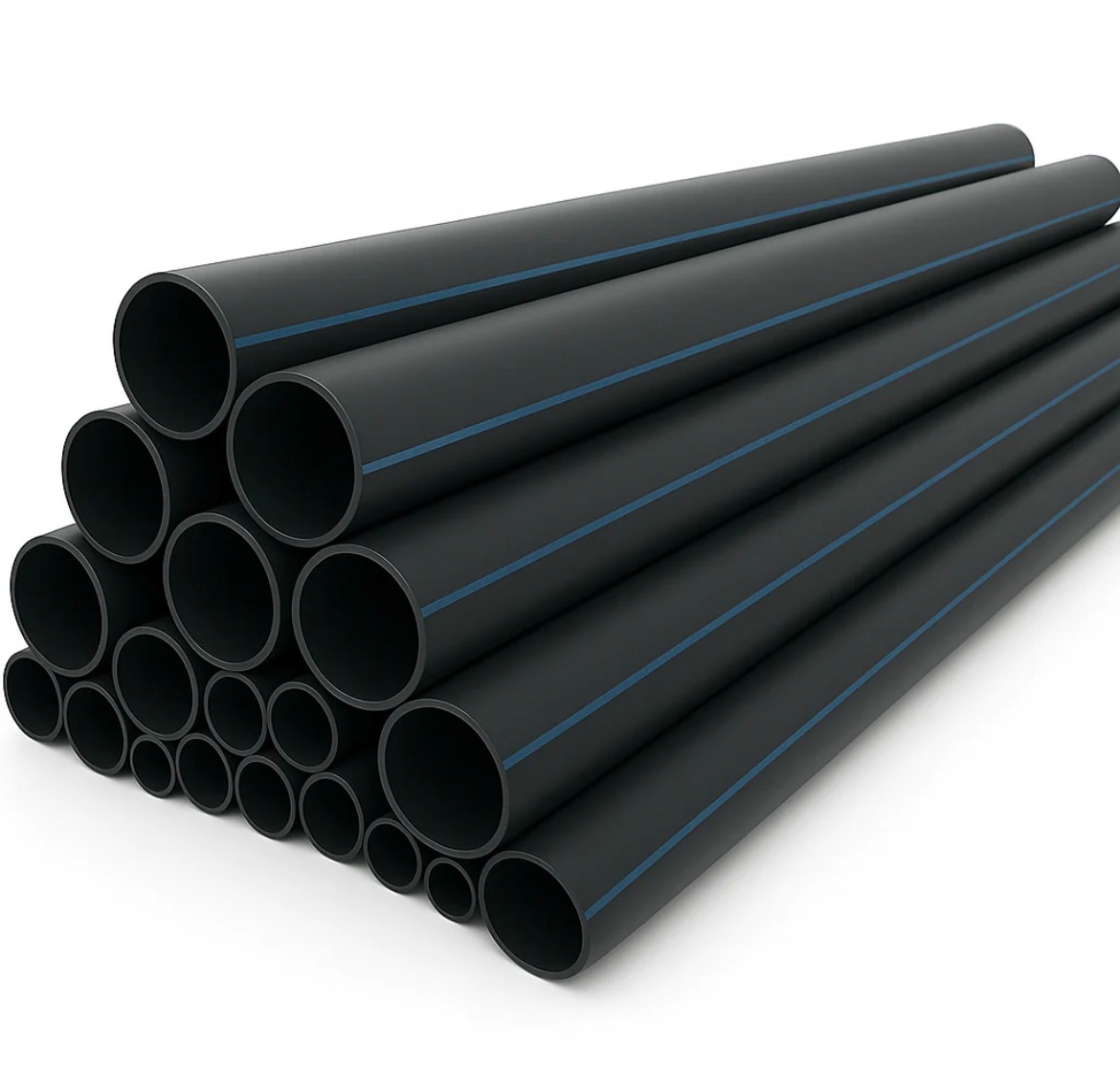 | HDPE Pipe Manufacturing Our HDPE pipes are manufactured using advanced, state-of-the-art technology to ensure superior strength, flexibility, and long-lasting performance. View product → |
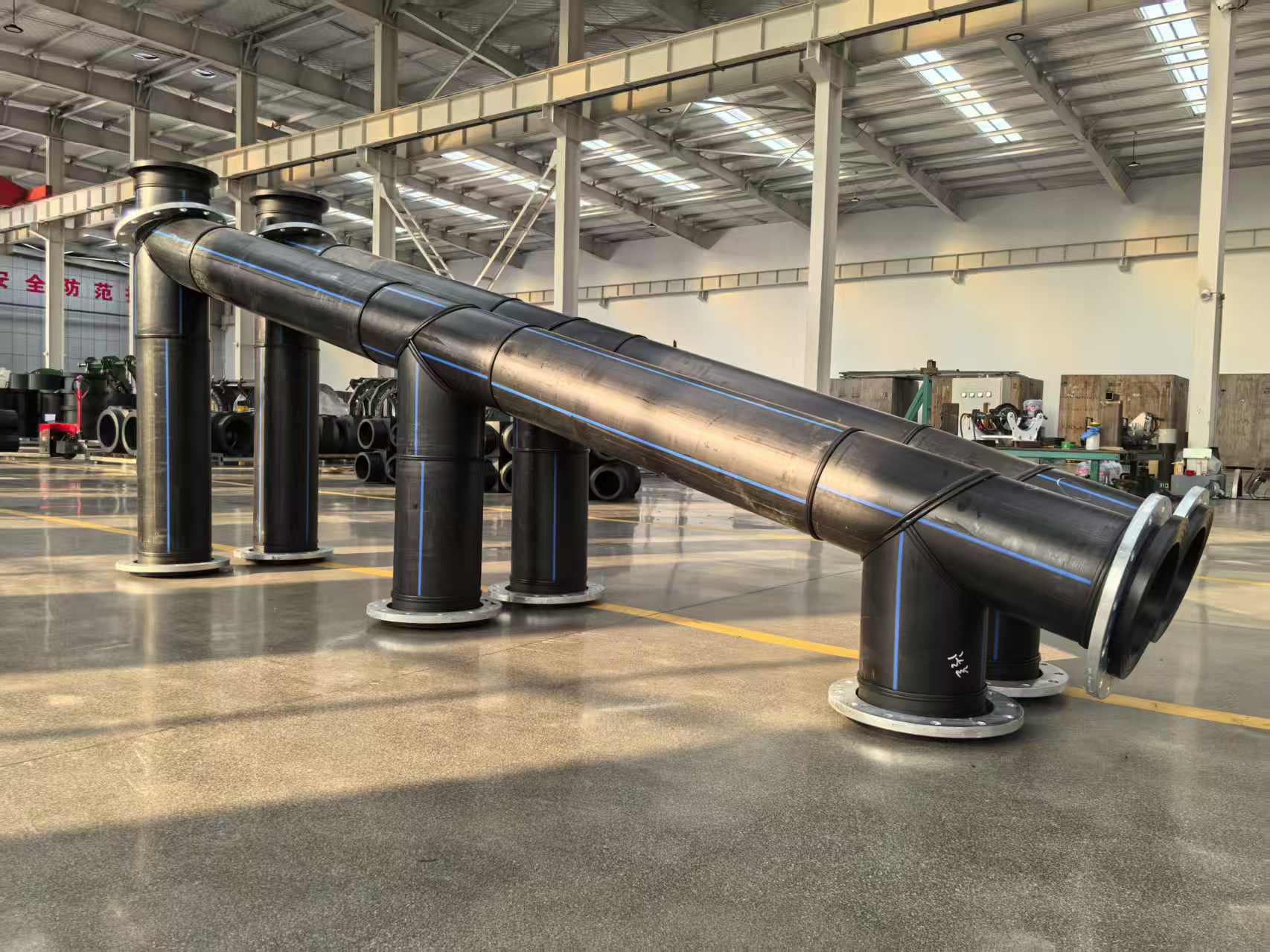 | Custom Piping Solutions We provide tailor-made drainage and plumbing solutions based on your project requirements. View product → |
Which joint and installation details prevent failure
A leakage-free line starts with the joint classification, not the joining tool. Solid-wall HDPE uses fusion; corrugated and structured-wall products commonly use mechanical joints, and each system needs its own installation procedure.
| Joint method | Suitable product | Controls that prevent failure |
|---|---|---|
| Butt fusion | Solid-wall HDPE | Clean, square, aligned ends; controlled heating; correct bead; full cooling before movement |
| Electrofusion | Solid-wall HDPE | Scraped and clean surfaces, aligned fittings, controlled heating and cooling, qualified operators |
| Gasketed bell-and-spigot | Corrugated or structured-wall pipe | Correct gasket, clean socket, full insertion, and confirmation of soil-tight or watertight classification |
| Coupling or sleeve | Many corrugated and structured-wall systems | Compatible dimensions, undamaged seals, correct insertion and manufacturer-specified restraint |
Do not solvent-cement HDPE. A mechanically assembled joint is not automatically watertight; check the product test classification before choosing it for groundwater-sensitive or contaminated sites.
Prepare the trench and embedment before lowering pipe:
- Set trench width, stable bedding, haunch support and specified backfill compaction.
- Compact material beneath and around the springline. Voids in the haunch zone can cause excessive deflection.
- Control groundwater, keep construction traffic off unsupported pipe and follow the product’s minimum bend radius.
- Allow for thermal movement at risers, manholes, building entries and exposed transitions. Use about 0.18 mm per metre per °C as a common HDPE expansion design value.
- Inspect joints, line and grade, then complete the specified leakage, infiltration or pressure test before covering the work.
A buyer comparing an hdpe drainage pipe manufacturer in pune should request the joint procedure, classification and installation limits with the pipe quotation.
What to verify before approving a drainage system
Approve the system only after the pipe, joint, chemistry and buried installation have passed a service-specific check. A product labelled HDPE is not automatically suitable for every drainage duty.
1. Match the construction and rating to the service: gravity sewer, stormwater, culvert, field drain, effluent, leachate, mine drainage or temporary bypass. Confirm whether perforated pipe has a designed filter aggregate or geotextile arrangement and a defined outlet.
2. Check the actual chemical mixture, concentration and operating temperature. HDPE resists many aqueous chemicals, but concentrated oxidising chemicals, elevated temperatures and permeation risks require written compatibility guidance.
3. Confirm the joint classification: soil-tight or watertight, as the project requires. Check that the specified gasket, coupling, sleeve, butt-fusion or electrofusion method has matching installation instructions.
4. Review published dimensions, internal diameter, ring-stiffness or pressure data, temperature limits, chemical guidance, fusion or gasket procedures and test certificates. Reject a quotation that supplies only a metre rate and polymer name.
5. Separate laboratory pipe stiffness from installed load capacity. Cover depth, groundwater, trench width, embedment, haunch compaction, soil-pipe interaction, traffic loading and permitted deflection govern the buried result.
For anyone comparing an hdpe drainage pipe manufacturer in pune, choose documented compliance and installation support over the HDPE label alone. A higher stiffness class cannot rescue poor backfill or uncontrolled groundwater.
Frequently asked questions
Where are HDPE drainage pipes used in practice?
They carry sewage, rainwater, groundwater, effluent, leachate and mine water in buried gravity drainage systems.
How does gravity drainage affect HDPE pipe selection?
Gravity systems depend on pipe slope, internal diameter, flow depth, pipe stiffness, bedding and cover rather than pressure rating alone.
How should you size and specify an HDPE drainage pipe?
Define the design flow, pipe diameter, slope, burial depth, traffic loading, stiffness class, temperature and jointing method before purchase.
Which joint and installation details prevent drainage pipe failure?
Use the specified butt-fusion, electrofusion or gasketed joint, then control trench width, bedding, alignment, backfill and compaction.
What should you verify before approving an HDPE drainage system?
Check product dimensions, stiffness classification, material documentation, joint quality, installation records, inspection results and leak or flow-test evidence.
Keywords