A telecom duct order fails when it is based on route length alone: chambers, branches, slack, joints, crossings, storage and testing all change the usable quantity and delivery date. By the end, you will be able to turn a route drawing or BOQ into a purchase schedule with defined duct specifications, accessories, inspection records and staged deliveries.
Key takeaways
- Measure chambers, branches, risers and entries separately from cable length.
- Freeze duct diameter, pressure class, colour and installation method before pricing.
- Require batch records, dimensional checks and site-ready packaging before dispatch.
- Sequence deliveries by trench readiness, storage limits and cable-pulling dates.
Convert the Route Drawing into a Complete Duct Quantity
A nominal 1 km cable route is not a 1 km procurement quantity. The BOQ must separate cable-route length from duct-route length because ducts follow chambers, road crossings, risers, branches and building entries rather than the cable’s measured centreline.
1. Measure the main duct route from the approved drawing, then record each addition separately: branch routes, risers, chamber slack, building-entry loops and surveyed route deviations. Do not hide these items inside one percentage.
2. Add installation wastage by work type. Use separate allowances for open trench, HDD, road crossing and temporary-exposure work; pulling damage, rejected sections and jointing losses differ substantially. The total is a measured planning quantity, not a nominal kilometre.
3. Convert length to coils with this formula: coil count = ceiling(total required length ÷ supplier-stated coil length). A 500 m coil and a 1,000 m coil produce different orders even for the same route.
4. For plb duct supply planning, require the supplier to state coil outside diameter, coil weight, loading method and maximum joints per supplied kilometre. These figures determine trucks, unloading equipment, storage space and joint labour.
Take-off schedule:
| Item | Quantity basis |
|---|---|
| Couplers | One per planned joint, plus approved spare units |
| End caps or plugs | Every open duct end and spare coil end |
| Draw rope | Every duct route or supplier-approved pre-installed rope |
| Chamber-entry protection | Every chamber and riser transition |
| Sealing components | Every chamber, building entry and joint requiring sealing |
| Route markers | Each drawing-defined marker or change point |
This worksheet gives plb ducts for infrastructure contractors a usable purchase quantity instead of a misleading headline distance.
Freeze the Duct Specification Before Requesting Prices
A quote for “40 mm duct” is incomplete: freeze the specification before requesting prices, or competing suppliers will price different products under the same label.
For PLB duct requirements in Pune, state every parameter in the purchase specification:
- Nominal outside diameter, minimum inside diameter, wall thickness or SDR
- Single-wall or co-extruded construction, material designation, colour and tracer or stripe marking
- Permitted ovality, coil length and permissible cable size
- Manufacturer’s bend-radius limit, pulling-tension limit and approved jointing method
40/33 mm is a commonly encountered Indian size, not a universal Pune requirement. Approximately 32/26 mm, 50/42 mm and larger sizes may suit different cable counts, blowing methods and spare-capacity targets.
| Size | Typical bore relationship | Selection question |
|---|---|---|
| 32/26 mm | Smaller bore | Does one cable and the planned blowing method fit? |
| 40/33 mm | Common Indian telecom size | Does it provide the specified spare capacity? |
| 50/42 mm or larger | Greater bore | Do cable count, pulling limits and future capacity justify it? |
Your PLB duct requirements for contractor supply planning must name the governing tender reference: IS 14930 where cited, a Department of Telecommunications generic requirement, or the operator’s project specification. Those documents control dimensions, tests, marking and acceptance.
Require dimensional drawings, material and test reports, marking details and a sample before approving production. Specify couplers that match the actual outside diameter, wall construction and tolerance—not merely a nominal size—or joints can leak, restrict cable blowing or pull apart.
Match Duct Selection to the Route and Cable Installation Method
Ordinary open-trench sections can use the selected PLB duct only after the approved drawing fixes cover, soil loading, traffic loading, protection slab, warning tape, duct-bank layout and authority requirements. Do not adopt a universal Pune trench detail: road owner, utility clearance, carriageway type and tender drawings control each dimension.
HDD, road crossings, bridge or culvert routes need separate entries on the route plan, including pulling tension, bend radius, casing or protection detail and joint locations. Risers, chamber entries and building connections need shown bend radii and entry geometry; tight temporary coiling, sharp turns and unsupported riser bends can reduce the effective bore.
| Configuration | Check before ordering | Main risk |
|---|---|---|
| Open trench PLB | Cable size, count, cover and spare ducts | Low price becomes costly if protection is missing |
| HDD or road crossing | Pull strength, bend control, casing and joint density | Collapse or excessive friction during installation |
| Microduct | Small cable count and blowing method | Insufficient bore for pulling |
| Rigid conduit | High mechanical protection and fixed alignment | More joints and less route flexibility |
| Direct-buried protection | Cable size and burial protection | Limited future spare capacity |
For plb ducts for infrastructure contractors, specify whether cables will be blown or pulled, then require compatible couplers, plugs, rope, chamber protection and seals. Before cable installation, perform continuity and a mandrel or proving-plug test; add rope and air tests where the project method specifies them.
This comparison helps telecom duct contractors in maharashtra reject a lower metre price that creates higher installation risk.
Set Batch Acceptance, Testing and Site-Readiness Controls
1. For PLB duct requirements for contractor supply planning, create an incoming-inspection record for every delivery. Enter coil identification, batch or lot number, supplied length, outside and inside dimensions, wall-thickness readings, ovality, appearance, colour, marking and test certificates.
Measure more than one visible coil end; wall variation, deformation and damage can occur elsewhere in a long coil.
2. Accept the batch only against the cited tender or project standard, such as IS 14930 where specified, a Department of Telecommunications requirement or the operator’s project specification. Check material, dimensions, pressure or crush performance, workmanship, marking, sampling and rejection rules.
Reject coils that fail a stated limit, lack traceability or show cuts, flattening, contamination or unreadable identification.
3. Keep released coils on firm, level ground in Pune, away from sharp debris and standing water. Prevent dragging, theft, contamination and prolonged unsupported stacking; protect them from heat and monsoon rain without trapping moisture. Cap each duct immediately after laying and keep it sealed against mud, silt and water.
4. Before cable installation, record continuity, blockage, water ingress, collapsed sections, coupler alignment and bore deformation using a mandrel or proving plug. Complete rope or air testing when the project method specifies it, and hold cable work until failures are repaired and retested. This PLB duct supply planning record converts delivery approval into installation readiness.
Build a Delivery Schedule That Protects the Installation Window
Do not book bulk PLB duct until the route, storage area and installation window are real. For PLB duct supply planning, map drawing approval, route and utility clearance, sample approval, manufacturing lead time, batch testing, release documents, transport, unloading access, chamber completion and traffic-management or road-opening windows in one programme.
Release each consignment against an approved work front. Send coils only where the trench, chambers, access road and receiver are ready; an unprepared yard invites deformation, contamination, theft and extra handling. Record coil numbers, supplied lengths, accessories, inspection records and the responsible site receiver.
For PLB duct requirements in Pune, add a monsoon plan: firm drained ground, covered but ventilated storage, controlled access and a coil count after every movement. Ask the supplier for coil length, outside diameter, weight, loading method and maximum joints per supplied kilometre.
Compare quotations by usable delivered cost, not metre price alone.
| Supplier comparison | Include in the calculation |
|---|---|
| Usable length | Rejected length, joint density and coil losses |
| Installation cost | Couplers, end caps, rope, handling and unloading |
| Compliance value | Test records, release documents and warranty terms |
A Pune contractor can ask Harsh Agro Pipes And Fittings to confirm the selected bore, coil format, matching accessories, batch records and phased dispatch plan.
- Approved drawing, work front and road-opening window
- Bore, coil lengths, accessories and receiver
- Batch tests, inspection records and release documents
- Transport, unloading and rainy-season storage plan
Hold bulk production until the drawing, sample, route clearance and delivery schedule are signed off.
Related product
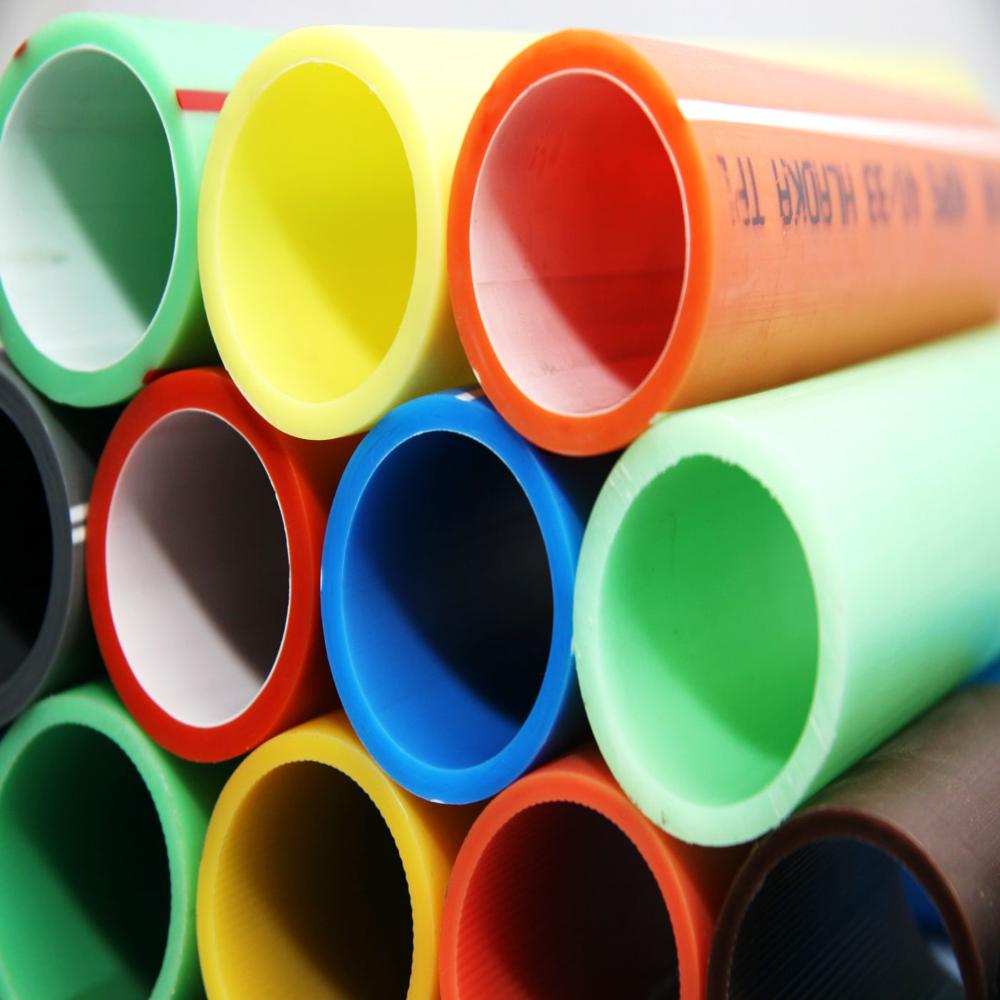 | PLB Duct Manufacturing Our PLB ducts are UV resistant and weatherproof, making them perfect for protecting optical fiber cables in telecom infrastructure. View product → |
Frequently asked questions
How do you convert a telecom route drawing into a PLB duct quantity?
Measure the duct route rather than the cable centreline, then add lengths for chambers, road crossings, risers, branches, building entries and approved installation waste.
Which PLB duct details must be fixed before requesting prices?
Specify the duct diameter, wall construction, pressure or performance class, colour, coil or straight-length format, jointing method, marking requirements and required test documents.
How should PLB duct selection match cable installation?
Match the duct’s internal diameter, bend route, chamber layout and pulling or blowing method to the cable size, installation equipment and permitted bend radius.
What controls make a PLB duct batch ready for site acceptance?
Check markings, dimensions, surface condition, coil or bundle damage, batch traceability and supplied test records before releasing material for installation.
How can delivery planning protect the telecom installation window?
Release ducts in route-ready lots, coordinate dispatch with trench and chamber completion, protect coils during storage and avoid deliveries that exceed the site’s handling capacity.
Keywords