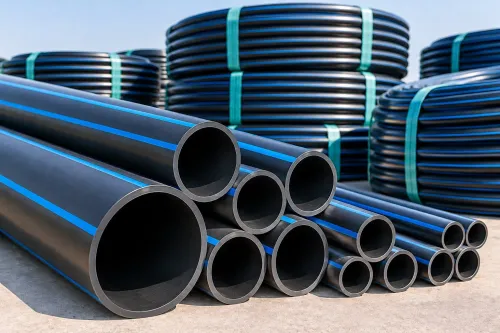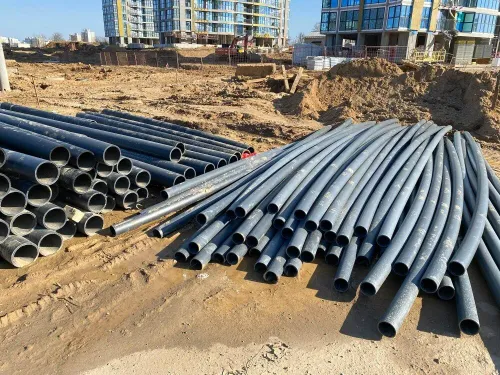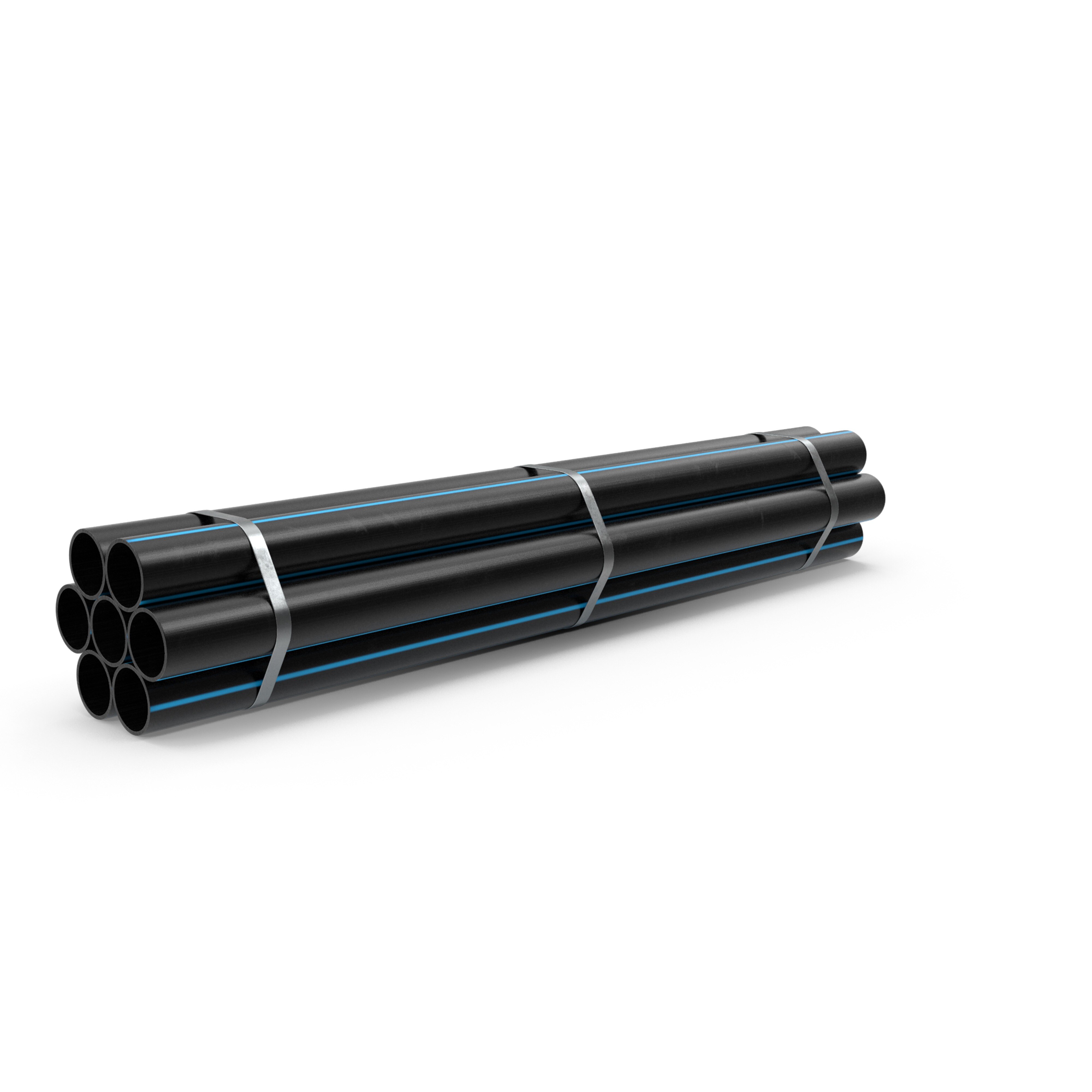
An industrial quotation for HDPE plumbing pipes is incomplete if it lists only a nominal diameter and a pressure rating. Define the fluid, temperature, pressure transients, SDR, material grade, governing standard, joining method, service life, and required test records before comparing suppliers; by the end, you will have a specification that distinguishes pressure pipe from drainage or telecom products.
Key takeaways
- Specify fluid, pressure, temperature, dimensions, joints, and service life before requesting quotes.
- Select SDR, resin grade, dimensions, and governing standard as one design decision.
- Require pressure, dimensional, fusion, and material test records with batch traceability.
- Check surge pressure, operating temperature, and chemical compatibility before selecting HDPE plumbing pipes.
Set the pipe requirements before requesting quotations
State the service conditions before asking for a price; “HDPE” alone does not identify the correct pipe. Your hdpe plumbing pipes requirements must define the fluid, pressure, temperature, dimensions, joining method, and required service life.
1. Describe the application: process water, potable water, compressed air, chemicals, slurry, drainage, or another fluid. Name the fluid concentration and contamination limits, because chemical compatibility changes with temperature and concentration.
2. Provide the design pressure, normal operating pressure, allowable surge pressure, flow rate, elevation profile, and pump or valve operating pattern. Include water-hammer limits; a steady pressure figure alone can produce failures during pump start-up or shutdown.
3. Specify the nominal outside diameter, required wall thickness or SDR, length, tolerance, colour, and installation arrangement. Ask for outside-diameter sizing under ISO 4427, ASTM F714, ASTM D3035, or another named standard rather than comparing nominal sizes alone.
4. Identify the material basis, such as PE80, PE100, or PE4710, and state the design temperature and service life. For potable water, require certification for the exact pipe and size range under NSF/ANSI/CAN 61 and, where applicable, NSF/ANSI 14.
5. Describe connections at valves, pumps, tanks, and metal pipework: butt fusion, electrofusion, flanged adapters, or approved mechanical transition fittings. Do not specify solvent cement or conventional threading for HDPE.
Request the quotation with the exact standard, pressure-temperature rating, dimensional tolerances, fusion compatibility, resin lot traceability, production-run identification, and inspection and hydrostatic-test records. This evidence separates a compliant product from an unspecified black pipe.
Choose dimensions, SDR, material grade, and governing standard together
Select outside diameter, SDR, material grade, and governing standard as one design package. HDPE plumbing pipes requirements are not met by choosing a nominal size alone: specify the outside diameter, wall thickness, pressure class, fluid temperature, and required service life.
SDR equals outside diameter divided by wall thickness; a lower SDR gives a thicker wall and higher pressure capacity.
- State the design pressure, including surge, and apply the standard’s temperature derating rather than using the 20°C rating at every operating temperature.
- Name the standard: ISO 4427 for water supply, ASTM F714 for large-diameter polyethylene pipe, ASTM D3035 for water-service pipe, or AWWA C906 where that specification governs.
- Require the resin designation, minimum strength or hydrostatic design basis, dimensional tolerances, and compatibility with the specified fusion or fitting system.
| Grade | What it establishes | What to require |
|---|---|---|
| PE80 | ISO material class with a 50-year minimum required strength of 8.0 MPa at 20°C | ISO 4427 classification, SDR, pressure rating, and resin evidence |
| PE100 | ISO material class with a 50-year minimum required strength of 10.0 MPa at 20°C | Use when its higher strength permits the specified pressure at a thinner wall or smaller outside diameter |
| PE4710 | North American designation tied to a hydrostatic design basis, not the ISO PE100 label | State the applicable ASTM standard and HDB; do not substitute PE100 by name alone |
During hdpe pipe manufacturing, dimensional control must match the selected standard and SDR. Ask for the exact material designation and test report; “HDPE” alone cannot establish pressure performance.
Control resin selection and the extrusion process
Select a resin grade qualified for the specified standard, pressure class, temperature and fluid; “HDPE” alone cannot establish service performance. In hdpe pipe manufacturing, verify the approved compound, resin lot, density, melt-flow range, stabilizer package, and carbon-black content and dispersion for black outdoor pipe.
Potable-water hdpe plumbing applications also require certification for the exact finished pipe, size range and service, such as NSF/ANSI/CAN 61, not certification of the resin supplier alone.
| Resin or product choice | Verify | Why it matters |
|---|---|---|
| PE80, PE100 or PE4710 | Grade, compound designation and standard | Determines allowable stress, pressure design and qualification basis |
| Black pressure-pipe compound | Carbon-black content, dispersion and UV stabilisation | Poor dispersion can reduce long-term outdoor performance |
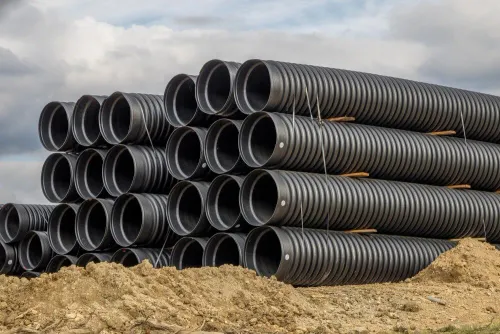
| Pressure pipe, DWC or PLB | Applicable product standard and test basis | Drainage and telecom products are not pressure-rated plumbing substitutes |
The extrusion line must melt, homogenise and filter the compound before forming it through a controlled die. Record melt temperature, screw speed, line speed, vacuum sizing, cooling-water temperature and flow, haul-off speed, and cutting or coiling settings; drift in any of these can produce wall-thickness variation, ovality or incorrect outside diameter.
Inspect dimensions continuously, including wall thickness around the circumference, and print the standard, size, SDR, material designation, manufacturer, production date and run code on the pipe. An acceptable outside diameter alone does not prove pressure-pipe compliance.
Account for joining, pressure transients, temperature, and fluid compatibility
Specify installation and operating conditions before accepting an HDPE pipe quotation; SDR alone cannot show whether the system will survive service. The hdpe plumbing pipes requirements must cover fluid behaviour, pressure history, temperature, joining method, and surrounding loads. This matters in hdpe plumbing applications involving chemical transfer, slurry, cooling water, wastewater, or buried networks.
- State steady-state pressure, design life, flow velocity, nominal diameter, and the required pressure class.
- Provide pump-start, pump-stop, valve-closure, and elevation data for a pressure-transient calculation. Water hammer can exceed the steady pressure and damage an otherwise suitable pipe.
- Give minimum and maximum fluid temperature, ambient temperature, and exposure duration. HDPE pressure ratings change with temperature.
- Identify the fluid, concentration, suspended solids, cleaning chemicals, and any solvent contact. General corrosion resistance does not prove compatibility with every chemical.
- Describe burial depth, traffic or structural loads, support spacing, sunlight exposure, and movement at connections.
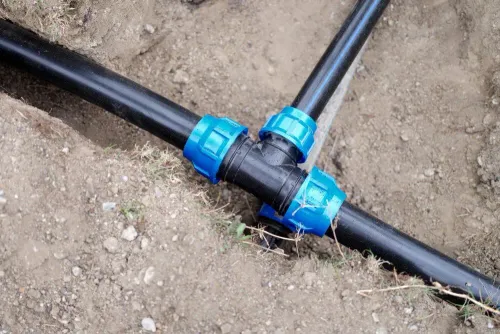
Select the joining method with the pipe and fittings as one system. Butt fusion is common for large-diameter pressure lines, but it is a controlled thermal process under ASTM F2620. Contaminated faces, poor alignment, excessive changeover time, or moving the joint before cooling can produce a weak or misaligned connection.
Confirm fitting compatibility, fusion procedures, and transition-piece details before installation. For potable service, verify NSF/ANSI/CAN 61 certification for the exact finished pipe and fittings, size range, and temperature; certification for the resin supplier alone is insufficient.
Demand test evidence and production traceability from the supplier
Approve an industrial plumbing pipe supplier only when each batch connects to a resin lot, extrusion run, inspection record, and named standard. “Made from HDPE” does not prove pressure performance: resin class, SDR, stabilization, dimensions, and joining method can differ substantially.
Request these records before release:
- A product data sheet stating outside diameter, wall thickness, SDR, PE grade, pressure rating, temperature limits, and governing standard: ISO 4427, ASTM F714, ASTM D3035, or AWWA C906.
- The resin certificate of analysis showing manufacturer, grade, lot number, melt-flow result, density, and stabilizer or carbon-black compliance.
- Production records linking the pipe’s printed identification to resin lot, extrusion date, line, operator, and coil or cut length.
- Dimensional and visual inspection results covering wall-thickness uniformity, outside diameter, ovality, surface defects, and continuous marking.
- Hydrostatic-pressure test reports stating test pressure, temperature, duration, specimen size, standard, and pass/fail result.
- Butt-fusion or electrofusion instructions, approved fitting list, and compatibility limits for valves, pumps, flanges, and transition fittings.
| Evidence type | What it proves | Do not substitute |
|---|---|---|
| Pressure-pipe qualification | Compliance with ISO 4427, ASTM F714, ASTM D3035, or AWWA C906 | DWC stiffness or PLB duct test results |
| Potable-water approval | Exact pipe or fitting meets NSF/ANSI/CAN 61, with NSF/ANSI 14 where specified | Certification belonging only to the resin supplier |
| Traceability record | Delivered hdpe plumbing pipes came from the tested production run | An undated certificate covering all production |
Harsh Agro Pipes And Fittings should be evaluated against this same evidence checklist, especially when its hdpe pipe manufacturing is being compared with other industrial plumbing pipe suppliers.
Related product
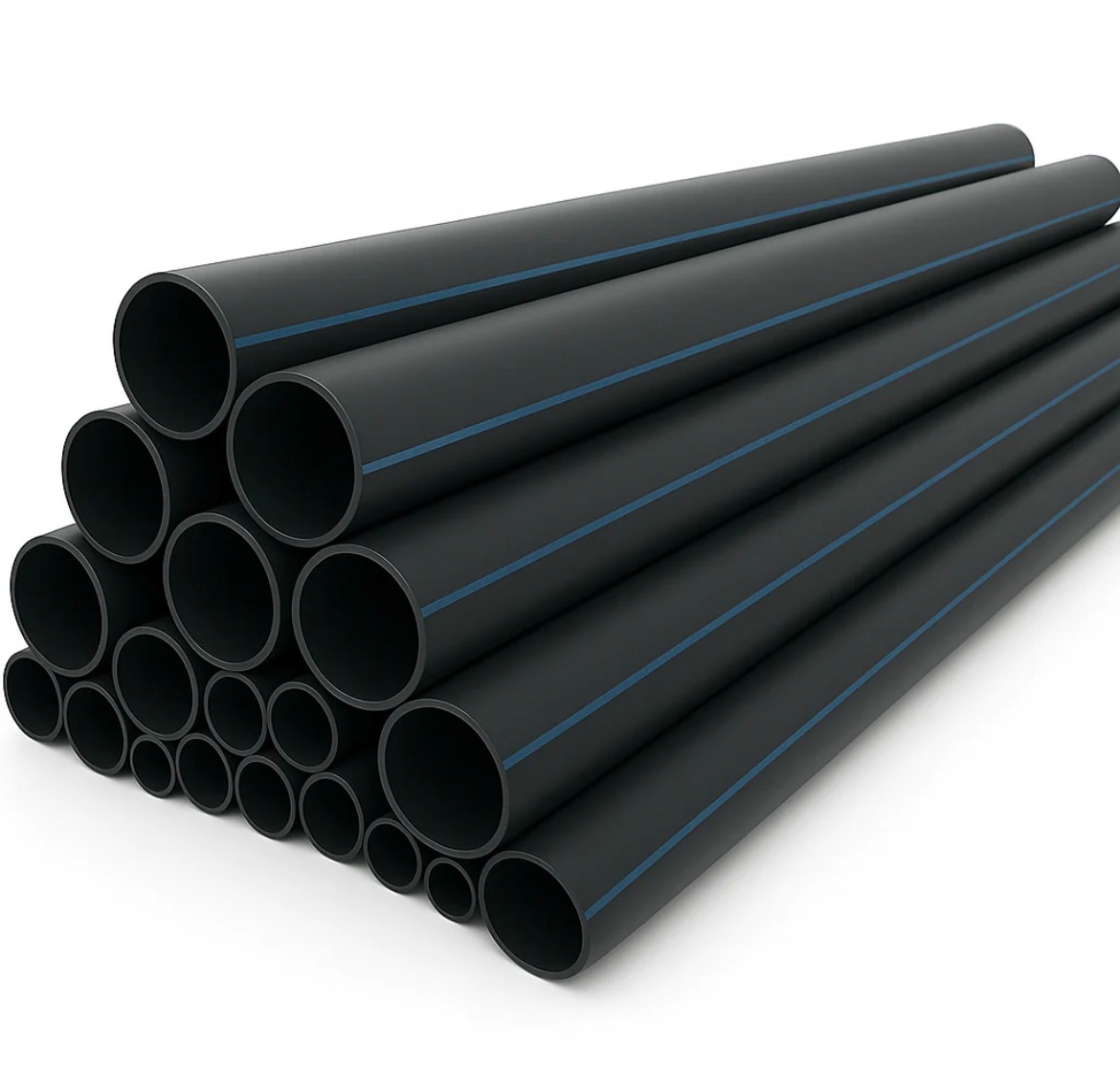 | HDPE Pipe Manufacturing Our HDPE pipes are manufactured using advanced, state-of-the-art technology to ensure superior strength, flexibility, and long-lasting performance. View product → |
Frequently asked questions
What information should you provide before requesting an HDPE pipe quotation?
State the fluid, operating and surge pressure, temperature range, pipe dimensions, joining method, installation conditions, and required service life.
How do SDR, material grade, dimensions, and standards affect HDPE pipe selection?
SDR links wall thickness to outside diameter and pressure capacity. Choose it with the resin grade, nominal dimensions, and governing standard because these specifications determine the pipe’s design and test requirements.
What should you verify in HDPE pipe manufacturing?
Ask how the supplier controls resin identification, drying and contamination, extrusion temperature, wall thickness, ovality, surface finish, cooling, marking, and dimensional consistency.
Which operating conditions can change an HDPE plumbing pipe specification?
Pressure transients, elevated temperature, joining method, installation loads, and fluid chemistry can change the required pressure rating, wall thickness, joint design, or material selection.
What test evidence and traceability should industrial plumbing pipe suppliers provide?
Request dimensional inspection results, hydrostatic pressure test records, material or resin documentation, fusion inspection records where applicable, product markings, batch numbers, and production records linking each delivery to its tests.
Keywords