
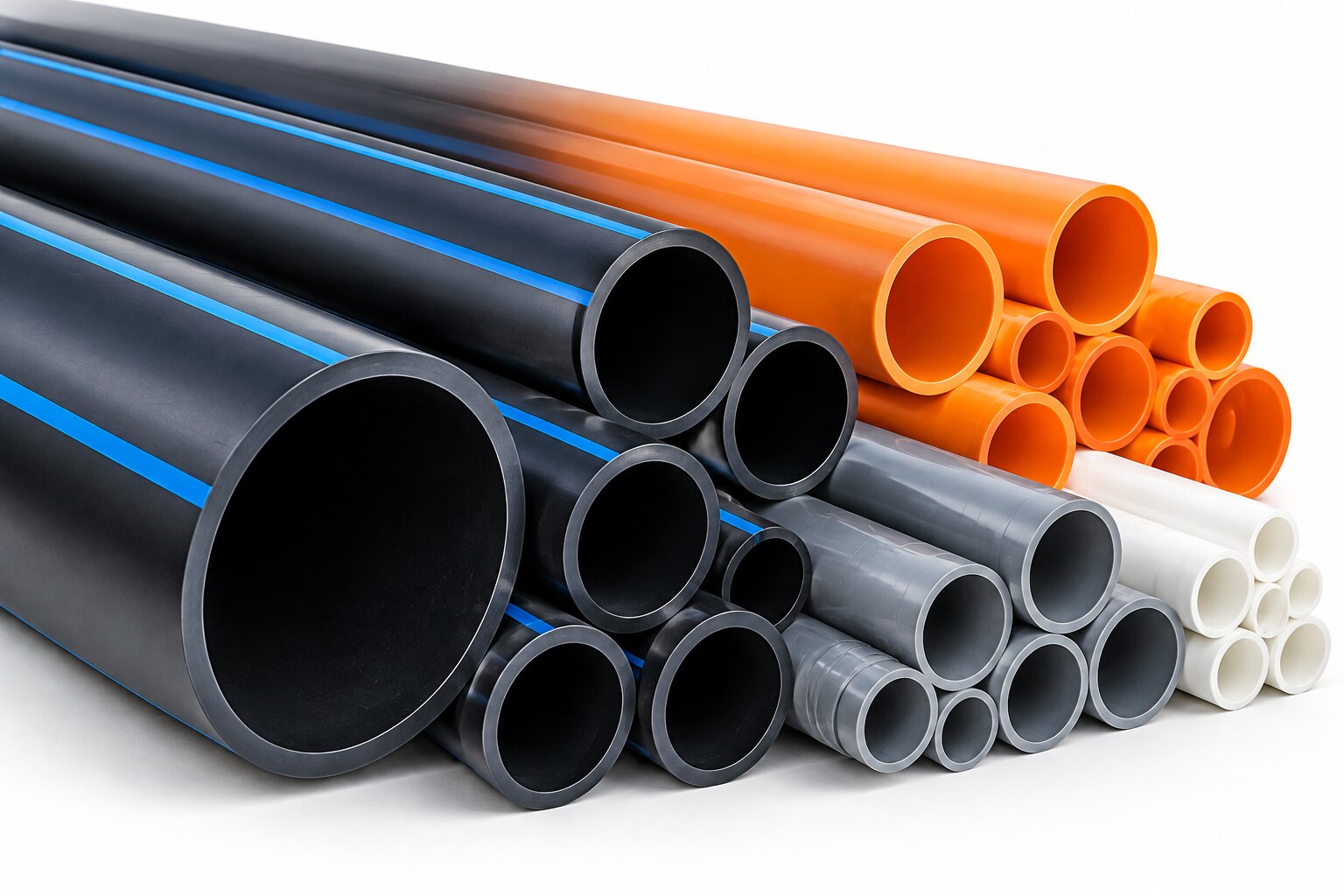
A government piping package must translate a tender, site conditions, hydraulic calculations, and inspection obligations into measurable pipe, joint, installation, and documentation requirements. By the end, you will be able to build a defensible piping schedule, compare materials and joints, and prepare the information a manufacturer needs to design and supply the system.
Key takeaways
- Record pressure, flow, temperature, soil, burial depth, and route constraints.
- Convert tender clauses into a numbered procurement specification and inspection plan.
- Match joints and installation methods to movement, access, ground, and route conditions.
- Send drawings, quantities, standards, testing, and approval documents to the manufacturer.
What makes government piping requirements different from private projects?
Government infrastructure projects require more than a pipe that appears suitable on site: acceptance depends on contract documents, inspection hold points, and recorded evidence. Treat custom piping requirements as design inputs from the start.
1. Read the tender conditions, approved material schedule, bill of quantities, technical specifications, drawings, and inspection and testing plan. Check the mandated Indian Standard edition, named equivalent material, third-party inspection clause, test certificates, and sample-approval requirement before specifying a product.
2. Mark every hold point: material approval before delivery; trench and bedding inspection before backfilling; joint inspection; pressure testing; mandrel testing for ducts; and final route verification. Factory dimensions or hydrostatic results do not prove correct installation, duct continuity, joint quality, or route performance.
3. Define traceability through resin batch, production date, dimensions, SDR or pressure class, pipe or duct lot, and test records. For fused systems, retain machine settings, operator identity, joint number, chainage or GPS position, and abnormal-event records.
4. Build the handover file during construction. Include as-built alignment drawings, chainage and joint records, pressure-test results, manufacturer certificates, nonconformance closures, operation manuals, warranty documents, and material traceability.
5. Create a compliance matrix linking each tender clause to a drawing, calculation, certificate, inspection record, or test result. A private project may accept a discussed substitute; government piping projects usually require a documented technical deviation and approval before procurement.
This evidence base supports custom piping solutions for requirements that survive technical scrutiny and payment verification.
Which technical inputs belong in the piping schedule?
A defensible piping schedule records measurable duty, geometry, installation conditions, and acceptance checks—not only material and diameter. Use these fields for each line item:
| Service | Technical inputs to record |
|---|---|
| Pressure pipe | Fluid, design and peak flow, operating and surge pressure, temperature range, chemical exposure, service life, outside diameter, SDR or DR, pressure class, design coefficient, temperature-derating basis, wall-thickness tolerance, allowable operating pressure |
| Sewerage, stormwater, buried non-pressure | Nominal diameter, ring stiffness class, deflection limit, bedding, side support, trench width, groundwater level and chemistry, backfill and compaction, burial depth, traffic surcharge, oils or industrial chemicals |
| Telecom duct | Cable type, usable internal diameter, cable fill, pulling tension, minimum bend radius, ovality limit, friction assumptions, proving-mandrel size, draw rope, coupler details, installation temperature |
Record the soil-report findings, route crossings, connection points, installation method, quantities by diameter and length, and delivery sequence. State whether the design uses butt fusion, electrofusion, compression fittings, rubber-ring joints, flanges, or concrete encasement.
For pressure pipe, do not treat PE100 as a pressure rating. It is a material classification; allowable pressure also depends on SDR, design coefficient, temperature, wall tolerance, and service conditions. A schedule built this way turns custom piping requirements into procurement data and gives tailored piping systems a checkable basis for design, inspection, and delivery.
How do you turn tender documents into an approved procurement specification?
Turn tender documents into an approved procurement specification by reading them in six layers: service requirement, design standard, product standard, construction method, inspection clause, and handover clause.
Cross-reference each application with IS 4984 for polyethylene water pipes, IS 14333 for HDPE sewerage pipes, IS 16205 for structured-wall plastic pipes, and the applicable CPHEEO water-supply or sewerage manual. Check the edition and amendment named in the tender before placing a standard number on a purchase order.
Create one schedule line for every route segment, diameter, or service:
- Item code, service, route or chainage, material, outside diameter or nominal bore, SDR or pressure class, stiffness class, length, joint type, fittings, test requirement, and inspection release point.
Compare materials against actual duty, not preference.
| Option | Check against the duty |
|---|---|
| HDPE | Pressure and surge, corrosion, bendability, repair access, and fusion equipment |
| DWC or structured-wall plastic | Ring stiffness, traffic loading, bedding, and deflection |
| PVC, ductile iron, reinforced concrete, or steel | Weight, corrosion, lifting equipment, jointing, repair access, and expected life |
Do not apply a straight-pipe rating to fabricated elbows, tees, reducers, manifolds, or saddles. Request fitting drawings, weld or fabrication procedures, inspection records, and allowable pressure approval. For potable water, obtain health-effects certification, such as NSF/ANSI/CAN 61 where adopted, separately from hydraulic compliance.
Include resin batch, production date, dimensions, lot number, and test records, then define controlled review for every material or geometry change in custom piping solutions and tailored piping systems for government piping projects.
Which joint and installation method fits the route?
Access and future maintenance decide the joint, not pipe diameter alone. Choose it after checking pressure testing, thermal movement, repair space, and future isolation; a poor choice can leave a leak beneath a road or prevent valve removal.
| Joint or method | Best fit | Controls and risks |
|---|---|---|
| Butt fusion | Long HDPE runs with equipment access | Face, align, heat, join, and cool without disturbance. Use a qualified procedure and record operator identification, machine settings, joint number, chainage or GPS, and abnormal events. |
| Electrofusion | Restricted space, repairs, branches | Control surface preparation, heating, cooling, fitting compatibility, and access for inspection. |
| Compression fitting | Smaller, accessible connections | Verify compatibility, insertion depth, and service-appropriate restraint. |
| Rubber-ring joint | Fast assembly and maintenance access | Check groove, seal, insertion, joint deflection, and pullout restraint. |
| Flange | Valves, pumps, and removable equipment | Allow for bolts, gaskets, alignment, and corrosion control. |
ASTM F2620 and ISO 21307 describe recognized butt-fusion procedures, but the tender controls the required procedure and qualification records. Compression or electrofusion is not a shortcut around inspection.
Concrete encasement belongs in specified protection zones or crossings, not as a substitute for bedding and structural design. For road, railway, canal, river, or utility crossings, define casing or carrier pipe, trenchless method, pullback force, bend radius, protection, entry and exit geometry, and approval interfaces.
Test the installed route, not only the factory product: pressure testing, duct continuity, proving-mandrel passage, joint inspection, and as-built survey must match the inspection plan. These records turn custom piping solutions into custom piping solutions for requirements that remain verifiable after handover.
What must you give a manufacturer before requesting a tailored system?
Send a complete design pack, not merely a diameter and product name. Include alignment drawings, longitudinal sections, hydraulic calculations, soil and groundwater reports, utility-survey data, road or rail crossing details, traffic-loading data, installation method, connection points, operating conditions, quantities by item, and delivery sequence.
1. For PLB or DWC ducts, state the cable type and provide pulling calculations covering cable fill, pulling tension, minimum bend radius, lubricant, proving-mandrel size, and draw-rope requirements. Specify the inner profile and coupler geometry; a duct that passes dimensional inspection can still fail when friction or ovalisation prevents cable installation.
2. For drip irrigation, provide source-water analysis, filtration and pressure-regulation details, emitter spacing, inlet-pressure range, discharge tolerance, flushing arrangement, and the required uniformity class. Tie nominal discharge to its stated test pressure and condition; ISO 9261 is a useful reference for emitter and emitting-pipe performance.
3. Ask for a design submittal containing calculations, drawings, material certificates, fitting ratings, joint procedures, inspection and test plans, and traceability from resin batch to installed lot. Require equivalence review or requalification after any change to resin grade, colour masterbatch, coextruded layer, wall thickness, perforation pattern, coupler geometry, or fusion-compatible surface.
Harsh Agro Pipes And Fittings can be evaluated for HDPE piping, ducts, drip lines, or a custom assembly, but approved custom piping requirements, qualification evidence, and project acceptance tests must control the purchase.
Related product
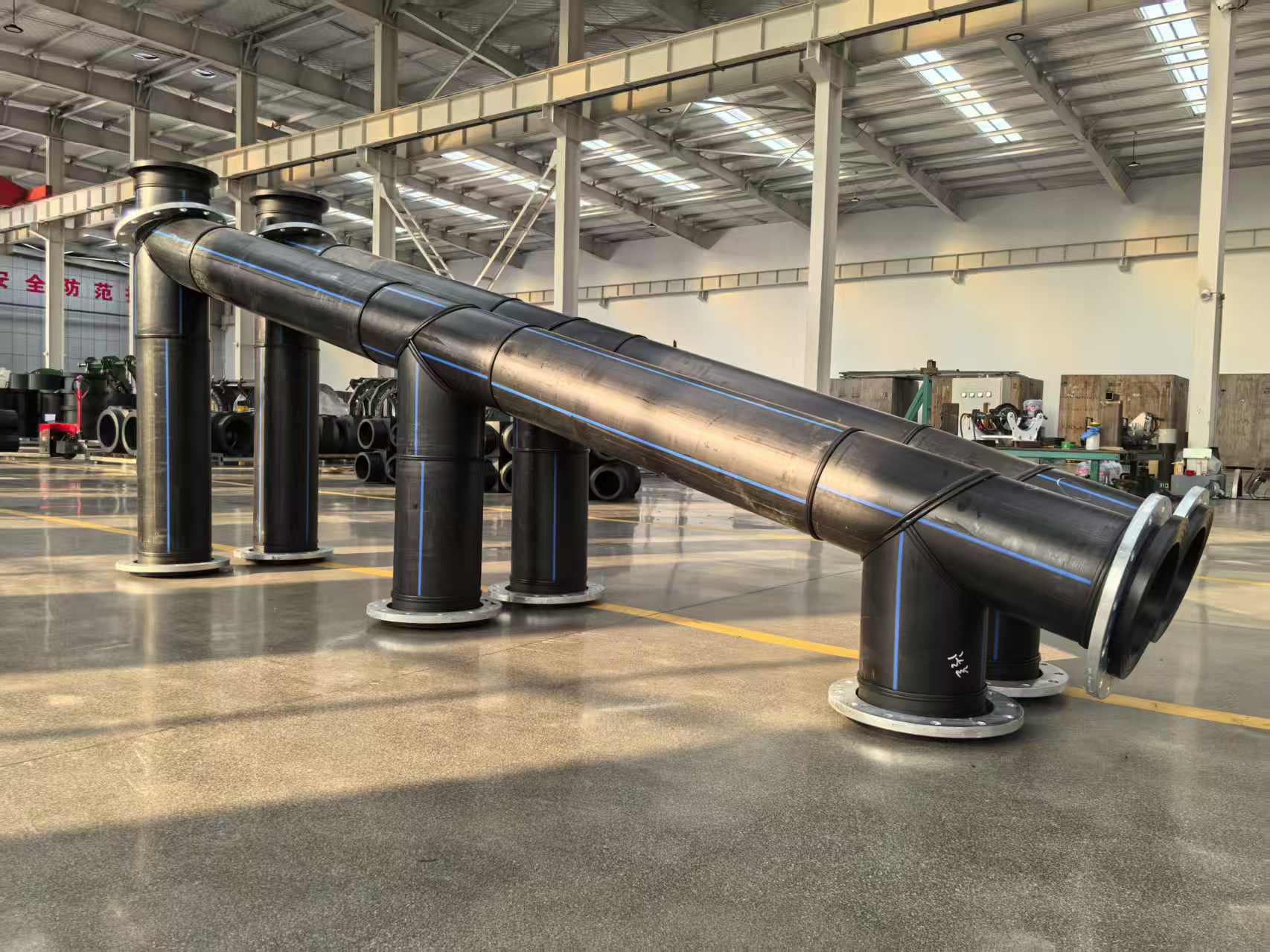 | Custom Piping Solutions We provide tailor-made drainage and plumbing solutions based on your project requirements. View product → |
Frequently asked questions
What makes government piping requirements different from private projects?
Government projects tie acceptance to tender clauses, approved drawings, inspection hold points, testing records, material traceability, and documented approvals. A pipe that performs on site can still be rejected if the supplied evidence does not match the contract.
Which technical inputs belong in the piping schedule?
Include nominal size, pressure class, SDR or wall thickness, material grade, fluid, design flow, operating and test pressure, temperature, route length, burial depth, soil conditions, installation method, joint type, fittings, chambers, and testing requirements.
How do you turn tender documents into an approved procurement specification?
Extract every pipe, fitting, standard, testing, inspection, submittal, and approval clause into a compliance matrix. Assign each requirement a document, drawing, test report, or inspection record that will prove compliance before procurement.
Which joint and installation method fits the route?
Select the joint and installation method after reviewing movement, access, ground conditions, pressure, alignment, trench dimensions, and repair needs. Butt fusion suits continuous HDPE runs, while electrofusion helps where access is restricted or fittings require local connections.
What must you give a manufacturer before requesting a tailored system?
Provide the tender, approved drawings, piping schedule, route profile, hydraulic data, operating conditions, soil and installation details, quantity take-off, joint requirements, testing plan, delivery sequence, and required compliance documents.
Keywords


